
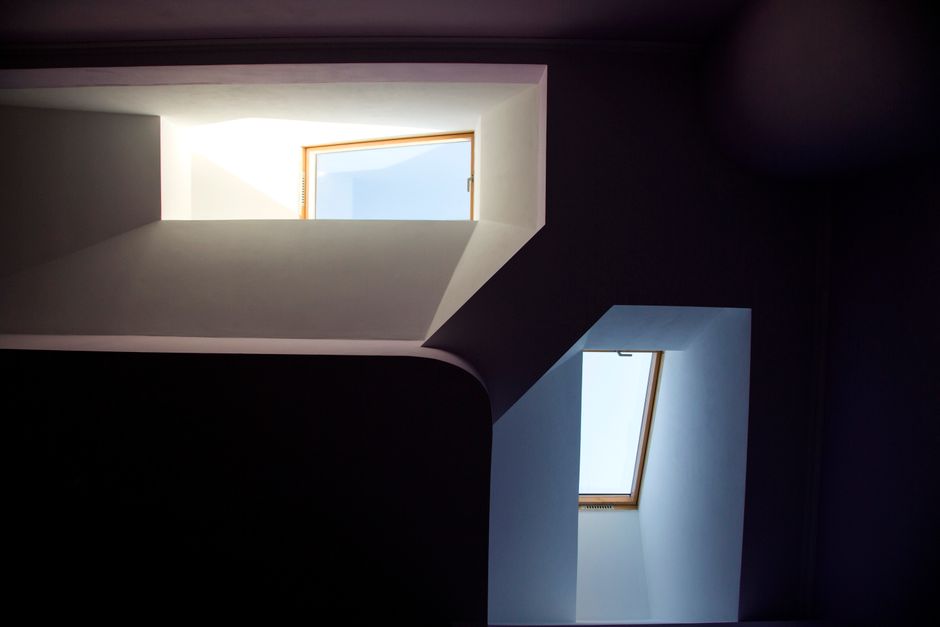
Skylights can make a dark room feel larger, brighter, and more connected to the outdoors. They also change how a roof handles water, snow, heat, air movement, and maintenance. A skylight is not simply a window placed overhead; it becomes part of the roof’s weatherproofing system.
For residents in Rome, NY, that distinction matters. Roofs must regularly manage snow, freezing temperatures, ice formation, wind-driven rain, and repeated freeze-thaw cycles. A well-designed skylight can perform reliably under those conditions, but poor installation or neglected flashing can create problems that spread beyond the skylight itself.
Do skylights make a roof more likely to leak?
A skylight does not automatically cause leaks, but it creates another opening that must be sealed and flashed correctly. Most skylight-related leaks occur around the frame, flashing, curb, or nearby roofing materials rather than through the glass or acrylic panel.
The skylight installation usually includes several layers:
- A weatherproof skylight frame
- Step flashing along the sides
- Head flashing at the upper edge
- Sill or apron flashing at the lower edge
- An underlayment system beneath the surrounding shingles
- Roofing materials tied into the flashing pattern
If any of these layers are missing, damaged, improperly overlapped, or incompatible with the roof covering, water can move beneath the shingles. The first visible sign may be a ceiling stain several feet away from the skylight because water can travel along roof decking, rafters, insulation, or interior finishes before appearing.
A small leak may remain hidden for a long time. By the time bubbling paint, damp insulation, or dark wood becomes visible, the roof sheathing or interior framing may already have sustained moisture damage.
How do skylights affect snow and ice on a roof?
Skylights can change the way snow melts and refreezes. Heat escaping from the room below may warm the skylight area, causing snow to melt sooner there than on nearby sections of the roof. Meltwater can then refreeze near colder roof edges, gutters, or overhangs.
This process can contribute to an ice dam, especially when combined with:
- Inadequate attic insulation
- Poor air sealing around the ceiling
- Limited attic ventilation
- Heavy snow accumulation
- Shaded roof sections
- Repeated daytime melting and nighttime freezing
The skylight itself may not be the original cause of the ice dam. Instead, it can become one of the places where water backs up or enters the roof system.
Snow can also slide suddenly from a sloped skylight. That can damage lower roofing materials, gutters, shrubs, exterior fixtures, or anything located below. A skylight’s position and slope should be considered when evaluating snow-shedding risks.
Can a skylight weaken the roof structure?
Most standard skylights are designed to fit between roof framing members, but installation may require cutting roof sheathing and modifying framing. A properly framed opening can remain structurally sound. An improperly altered opening can place stress on rafters, trusses, roof decking, or the skylight frame.
Roof framing should not be cut casually, particularly in homes with engineered trusses. Trusses are designed as complete structural units, and cutting or modifying their members can affect the entire roof assembly.
The size and location of the skylight also matter. Larger openings require more framing support, while skylights installed close to ridges, valleys, chimneys, or roof edges may complicate water drainage and flashing. The roof’s existing condition should be considered before creating a new opening.
Do skylights affect attic insulation and ventilation?
Yes. A skylight can become a weak point in the thermal envelope if it is not insulated and air-sealed properly. Heat may escape around the shaft or frame, while indoor moisture can enter the roof cavity through small gaps.
In winter, warm indoor air meeting a cold skylight shaft can create condensation. Repeated condensation may resemble a roof leak, although the water originates from indoor humidity rather than precipitation.
The shaft connecting the ceiling to the skylight should be insulated continuously. Its corners and joints should be sealed, and the surrounding attic insulation should not be pushed away or left thin. At the same time, insulation must not block required ventilation channels near the roof deck.
A skylight can provide useful daylight and passive solar heat, but excessive heat gain during warmer months may increase indoor temperatures. Shades, blinds, glazing type, and skylight orientation all affect comfort.
What should homeowners inspect around an existing skylight?
A basic visual inspection from inside the home can reveal early warning signs. Look for:
- Brown or yellow ceiling stains
- Peeling paint or bubbling drywall
- Dampness after rain or snowmelt
- Condensation between glazing layers
- Cracked or brittle sealant
- Drafts around the interior trim
- Mold-like odors near the shaft
- Warped wood or deteriorated trim
From the exterior, avoid walking on the skylight or climbing onto an icy roof. From a safe viewing position, check for lifted shingles, exposed underlayment, damaged flashing, debris buildup, or water collecting above the skylight.
A skylight may leak only during certain wind directions or during snowmelt. A dry ceiling on a clear day does not prove that the assembly is watertight.
Is replacing the skylight during a roof replacement necessary?
Not always, but roof replacement is often the most practical time to evaluate an older skylight. Once surrounding shingles and flashing are removed, hidden damage and the condition of the skylight frame are easier to assess.
Replacement deserves consideration when the unit has:
- Repeated leakage
- Cracked glazing
- Failed seals between glass layers
- Corroded or damaged flashing
- A warped frame
- Noticeable drafts
- Condensation that cannot be corrected
- A remaining service life much shorter than the new roof
Keeping an older skylight on a new roof can be reasonable if the unit is sound and its flashing can be integrated correctly. However, installing new roofing around a failing skylight may lead to another roof opening later, along with additional labor and material disruption.
What code and installation details matter in New York?
Skylight installation must follow applicable New York State building requirements and the manufacturer’s instructions. Requirements can address glazing safety, energy performance, roof slope, flashing, and curb height.
For lower-slope roofs, certain skylights may require a raised curb rather than being installed directly in the roof plane. The exact requirement depends on the product, roof design, slope, and applicable code provisions.
Flashing should be compatible with the roof covering and installed in a way that directs water downslope. Sealant alone is not a substitute for properly layered flashing. A bead of caulk may slow a leak temporarily, but it generally cannot correct missing or improperly installed weatherproofing.
How can skylight problems be distinguished from other roof problems?
Water near a skylight does not always mean the skylight is leaking. The source may be a nearby valley, plumbing vent, chimney, roof edge, or damaged shingle. Likewise, moisture around the interior shaft may result from condensation, poor insulation, or air leakage.
Tracing a leak requires examining the roof area above the visible interior damage, not just the point where water appears. Moisture meters, attic inspections, and careful examination of the roof assembly may be needed when the source is unclear.
For households in Rome, winter conditions can make diagnosis more difficult. Snow may conceal damaged flashing, and ice can temporarily block drainage paths. A leak that appears during a thaw may reflect water entering several days earlier.
A skylight can be a valuable part of a home, but it should be treated as a structural and weatherproofing feature rather than a simple glass accessory. Its long-term performance depends on sound framing, continuous insulation, correct flashing, appropriate roof slope, and regular observation of changes around the opening.
