
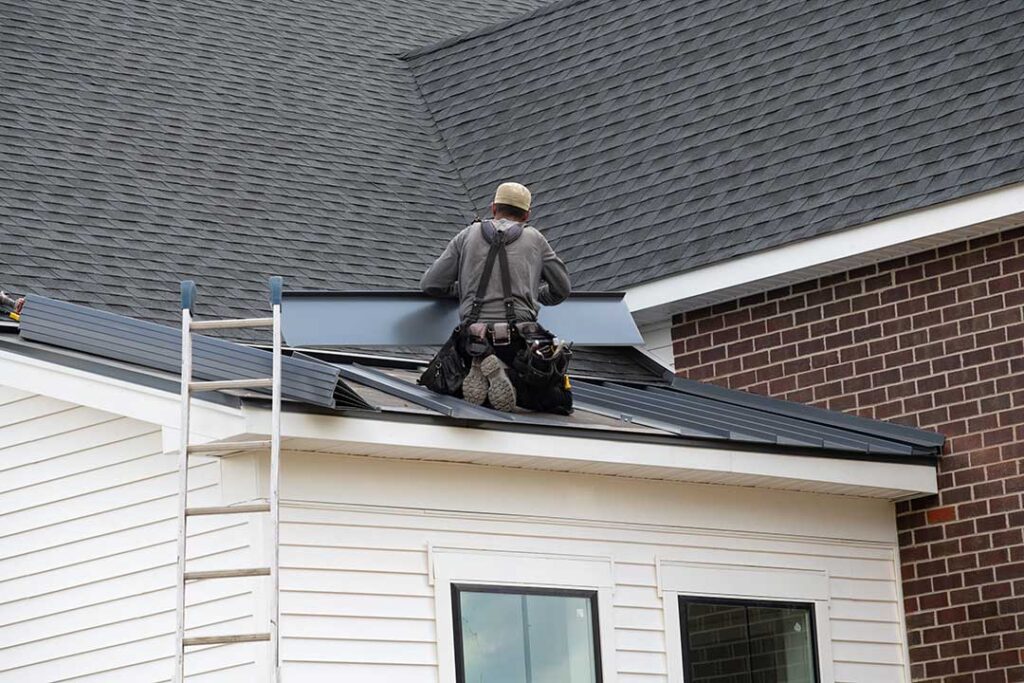
Why should roof maintenance begin in fall?
Fall is a useful time to inspect and prepare a roof because summer heat, storms, falling leaves, and changing temperatures can expose small problems before winter weather makes them harder to manage. In Rome, NY, a roof may need to handle heavy rain, strong winds, snow, ice, and repeated freeze-thaw cycles over the colder months.
A fall inspection does not require climbing onto the roof. Many important warning signs can be identified from the ground, attic, ceilings, and upper floors. The goal is to find conditions that could allow water or cold air into the home once temperatures drop.
What should homeowners check from the ground?
A ground-level inspection is the safest starting point. Use binoculars if needed, and look at the roof from several sides of the home.
Check for:
- Missing, cracked, curled, or visibly damaged shingles
- Dark areas that may indicate moisture or algae growth
- Exposed underlayment or roof decking
- Sagging sections along the roofline
- Loose or damaged flashing around chimneys, vents, skylights, and roof edges
- Gutters pulling away from the fascia
- Debris collecting in valleys or behind roof penetrations
- Tree limbs touching or hanging directly over the roof
A few scattered leaves are normal, but thick piles of leaves, twigs, or pine needles can hold moisture against roofing materials. Debris is especially concerning in roof valleys, where water naturally concentrates and may be diverted under shingles if the area becomes blocked.
Sagging deserves prompt attention because it can indicate moisture damage, weakened framing, or an excess load. A roof that appears uneven from the ground should not be treated as a minor cosmetic issue.
How should gutters and downspouts be prepared?
Clean gutters and downspouts before leaves become packed together. A blocked gutter can overflow against fascia boards, siding, windows, or the foundation. During freezing weather, trapped water may also contribute to ice buildup and added weight along the roof edge.
After removing leaves and sediment, check that:
- Water can move freely through each downspout
- Downspouts discharge away from the foundation
- Gutter sections remain securely attached
- Fasteners and end caps are not loose
- Water is not spilling over one section during rainfall
- Downspouts are not crushed, disconnected, or blocked underground
Gutter cleaning is more difficult and hazardous on taller homes or steep rooflines. Falls are a major risk, particularly when ladders are placed on wet ground, uneven surfaces, or icy areas. Ground-level extensions and splash blocks should also be positioned so roof runoff does not collect beside the foundation.
Should leaves and branches be removed from the roof?
Leaves and small branches should be removed when they accumulate, but the method matters. Walking on shingles can loosen protective granules, bend flashing, and cause damage that is not immediately visible. Using a roof rake or other tool from the ground can also harm shingles if it is pulled aggressively.
Avoid using pressure washing on roofing materials. High-pressure water can remove granules, force water beneath shingles, and damage flashing or seals.
For light debris, a soft brush or a carefully used leaf blower may be appropriate from a safe position, although blowing upward or toward roof edges can send debris beneath shingles or into gutters. If debris is lodged in a steep, high, or slippery area, the safer choice is to leave it undisturbed until it can be addressed without climbing into a hazardous position.
What should be checked around chimneys, vents, and skylights?
Roof penetrations are common sources of leaks because they interrupt the roof’s continuous drainage surface. In fall, inspect the areas around chimneys, plumbing vents, exhaust vents, and skylights for cracked sealant, lifted flashing, rust, or visible gaps.
From the ground, look for:
- Damaged metal flashing
- Missing or deteriorated mortar near a chimney
- Loose vent covers
- Cracked skylight edges
- Water stains on the ceiling below these areas
- Damp insulation or musty odors in the attic
Sealant alone is not a permanent substitute for properly installed flashing. Repeatedly adding caulk over an active leak may hide the symptom while moisture continues entering the roof assembly.
Chimneys also deserve attention before the heating season. A damaged chimney cap or deteriorated masonry can allow water to enter, while an obstructed flue can create a separate safety problem. Chimney and heating-system inspections should follow applicable safety requirements and manufacturer guidance.
How can the attic reveal roof problems?

The attic often shows evidence of a roof issue before the ceiling does. On a dry day, inspect the underside of the roof decking with a flashlight.
Look for:
- Dark water marks or fresh staining
- Damp insulation
- Mold-like growth caused by persistent moisture
- Rust around nails or metal fasteners
- Daylight visible through the roof
- Compressed or missing insulation
- Frost or condensation during cold weather
- Blocked soffit vents
Not every attic stain represents an active leak. A mark may come from an older problem, condensation, or a plumbing leak. However, a stain that feels damp, grows after rain, or appears alongside a musty odor should be investigated.
Proper ventilation helps remove heat and moisture from the attic. Soffit vents, ridge vents, gable vents, or other ventilation openings should not be covered by insulation or stored items. Ventilation does not eliminate the need for adequate insulation and air sealing, but it can help reduce condensation and damaging temperature differences.
What roof repairs should not wait until spring?
Some conditions are more urgent than routine fall maintenance. Water entering the home, a sagging roof surface, exposed decking, large areas of missing shingles, or major storm damage should not be postponed simply because winter is approaching.
Warning signs include:
- Active dripping or wet ceiling areas
- A ceiling that is swollen, cracked, or discolored
- Large sections of lifted or missing roofing
- A tree limb resting on the roof
- Structural sagging
- Repeated leaks after temporary patching
- Ice or water entering around a chimney, vent, or skylight
Place a container under an interior drip if necessary, but avoid standing beneath a bulging ceiling. Water can be heavier than it appears, and electrical fixtures near a leak may create an additional hazard. Roof surfaces become particularly dangerous when wet, frosted, or covered with early snow.
How do seasonal habits affect roof condition?
Roof maintenance also depends on what happens around the home. Keep branches trimmed away from the roof where possible, but do not attempt to remove large or unstable limbs without appropriate safety equipment. Avoid attaching decorations in ways that puncture shingles or block drainage paths.
After a major windstorm, inspect the ground for shingle fragments, flashing pieces, or fallen branches. Then check interior ceilings and the attic for signs of water entry. A roof can sustain wind damage even when the roof surface looks mostly intact from a distance.
Routine fall care is not about making a roof look perfect. It is about keeping drainage paths open, identifying moisture early, protecting vulnerable roof details, and avoiding unsafe conditions before snow and ice arrive. For households in Rome, those basic steps can make winter roof problems easier to detect and less likely to become hidden structural damage.
